
Inside the 5-layer IoT Stack:
The Secrets Behind Seamless Smart Device Connectivity

The IoT world is a playground of connected devices, from smart fridges to wearable health monitors. But behind the scenes, there’s a stack of protocols working tirelessly to ensure that these devices can communicate seamlessly. You might have heard of the 7-layer OSI model, but IoT simplifies things with just 5 layers. Why fewer? Let’s explore the layers first, and then I’ll show you why trimming the excess makes IoT tick.
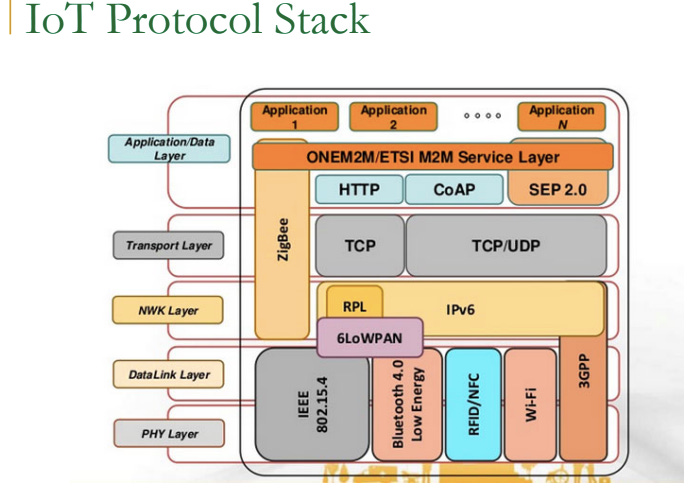
It may seem confusing but it's really simple.
Brace up for this is a long but enjoyable read( I have included short summarising, memory aid headlines beside the different subtopics).
1. Application/Data Layer – Where the Magic Happens
At the top of the IoT stack is the Application Layer, where users and applications interact. This is the layer that deals with what we care about most—data. Whether it's your smart thermostat reporting temperature or your fitness tracker syncing your steps, this layer handles how that information is shared.
Common Protocols:
CoAP (Constrained Application Protocol): Designed for low-power IoT devices, it works like a lightweight version of HTTP.
MQTT (Message Queuing Telemetry Transport): Often used in smart homes and wearables to send small packets of data between devices and servers.
Example:
When your smart doorbell sends a video clip to your phone, MQTT ensures the message reaches the cloud without using too much energy.
2. Transport Layer – Ensuring Data Gets There Safely
Next is the Transport Layer, responsible for getting the data from point A to point B reliably. Think of it as the delivery driver ensuring your packages (or data packets) reach their destination, intact and in order.
Common Protocols:
TCP (Transmission Control Protocol): Reliable communication, used for guaranteed data delivery.
UDP (User Datagram Protocol): Faster but less reliable, often used for real-time data (e.g., video streaming from a security camera).
Example:
Your home security camera uses UDP for live video streaming to ensure real-time footage, even if a few frames are dropped.
3. Network Layer – Routing the Data Right
The Network Layer is the GPS of the IoT world, figuring out the best route for data to travel across the network. It uses IP addresses, just like how your home address ensures the postal service delivers your mail correctly.
Common Protocols:
IPv4/IPv6: These protocols handle addressing, directing your data packets to their final destination.
Example:
When your smart thermostat sends a signal to the cloud, the Network Layer ensures that signal takes the most efficient route using your device's IP address.
4. Data Link Layer – Keeping It Local
The Data Link Layer handles data transmission between devices on the same local network. It’s the reason your Wi-Fi router knows to send data to your laptop and not your neighbor's device.
Common Technologies:
Wi-Fi: For wireless connections over local networks.
Bluetooth: Short-range, low-power communication, great for wearable devices.
Example:
When your fitness tracker syncs data with your phone via Bluetooth, the Data Link Layer makes sure the information reaches the right device.
5. Physical Layer – The Real World of Signals and Hardware
Finally, the Physical Layer deals with the actual hardware that transmits data—whether it’s Wi-Fi signals, Ethernet cables, or radio waves. It’s the foundation of any IoT network, ensuring data can physically move from one place to another.
Common Technologies:
LoRa: Long-range wireless communication, perfect for smart agriculture.
Ethernet: Wired connections for faster, more stable data transfer.
Example:
Your smart light bulb connects to your home network via Wi-Fi radio waves, thanks to the Physical Layer’s hardware.
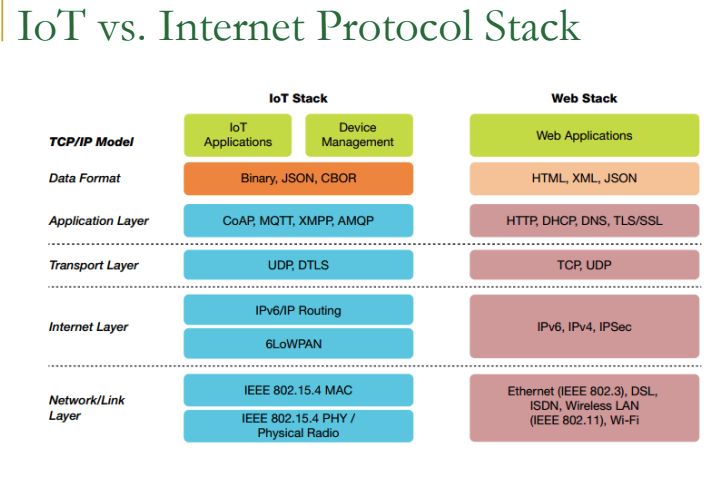
Why No Presentation or Session Layers?
You might be wondering—where are the Presentation and Session layers from the OSI model? Here’s the thing: IoT devices are designed to be lean and efficient, with minimal processing power. The extra complexity of the OSI model’s two additional layers is overkill for most IoT applications.
Presentation Layer (data translation, compression, encryption) is folded into the Application Layer in IoT. Why? Because the simpler, resource-constrained devices don’t need a whole layer just for these tasks.
Session Layer (managing connections) isn’t necessary because IoT protocols like MQTT already handle things like establishing and maintaining sessions.
In IoT, it’s all about reducing the overhead and keeping communication lightweight to conserve battery and processing power. That’s why the stack is trimmed down to 5 layers, perfectly suited for the needs of smart, connected devices.
We’ll delve into a real world project on my next publication.